
Loading...
Serving National City, CA and surrounding areas. (858) 599-0508
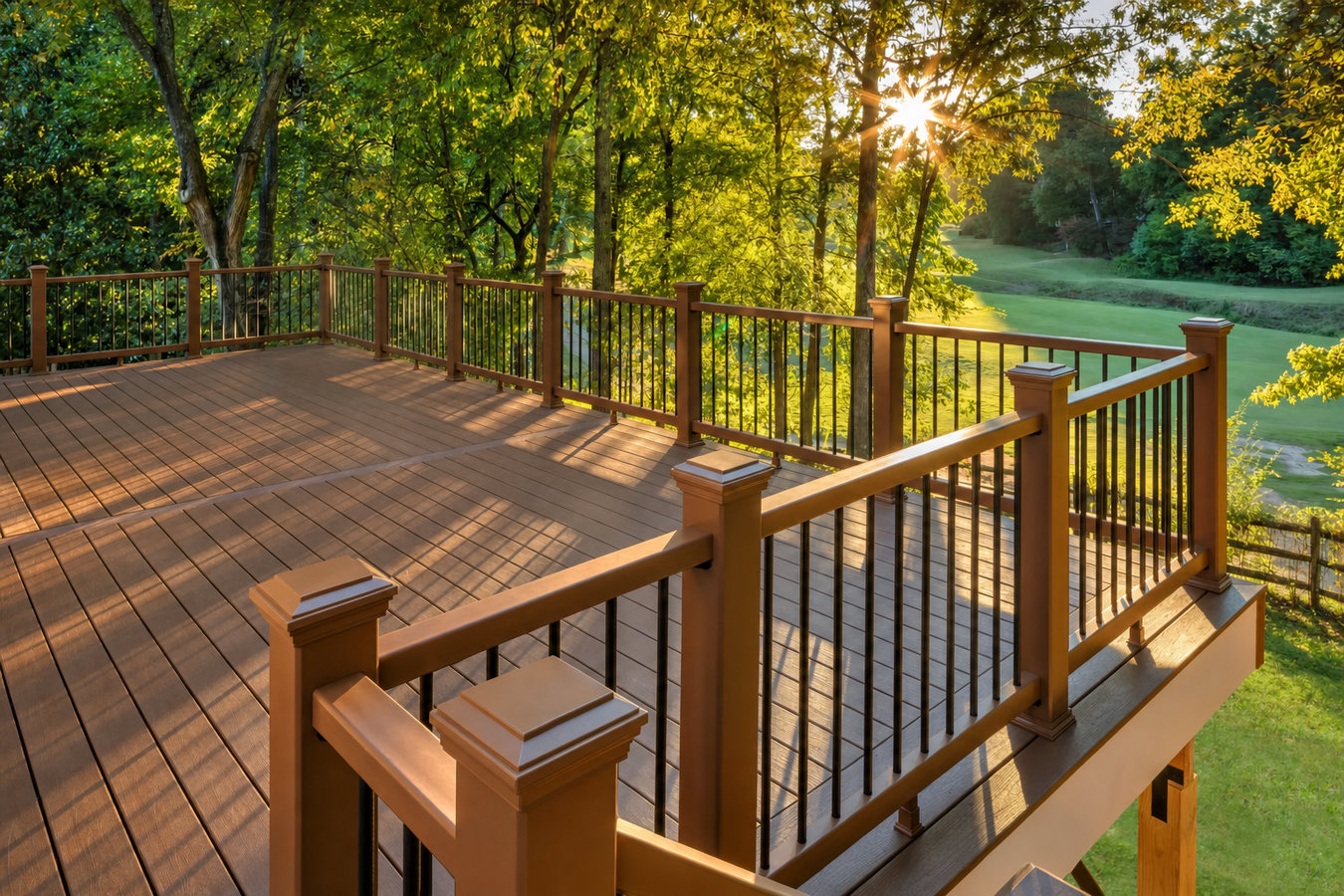
A wobbly railing or one that does not meet current safety standards puts your family at risk. We install railings that hold up near the bay and pass city inspection.
Deck railing installation in National City covers new railing on decks that never had one, full replacement of railings that have deteriorated or no longer meet safety standards, and most jobs are completed in one to two days once permits are approved.
California requires a railing on any deck that sits 30 inches or more above the ground - and the railing must be at least 36 inches tall with baluster gaps no wider than 4 inches. Many National City homes have decks built in the 1950s through 1970s when those rules were different, and an older railing that felt fine a few years ago may no longer hold up to a firm push or meet current child safety standards. The salt air off San Diego Bay accelerates the corrosion that makes this worse - rust on posts and hardware is not just cosmetic, it undermines the structural connection that keeps the railing in place. If your home has a multi-level structure, combining a railing replacement with a review of the full multi-level deck framing is worth doing at the same time rather than in two separate visits.
The post anchoring is the part of a railing installation that matters most and is hardest to evaluate from the outside. A railing that looks solid can still have posts that are undersized, spaced too far apart, or attached to deteriorated framing beneath the deck surface. We assess that underlying structure before we quote, so the price you agree to reflects what the job actually requires.
Give your railing a firm push at the midpoint between two posts. If it moves, flexes, or creaks, the posts are no longer anchored securely. A loose railing is a fall hazard - it can fail suddenly under the weight of someone leaning against it, especially at a gathering when people are using the deck heavily.
National City's proximity to San Diego Bay means salt air attacks metal hardware faster here than it would inland. If you see rust running down the posts or balusters, or the metal surface is bubbling or flaking, the corrosion has likely gone deeper than the surface. Patching is rarely worth the effort at that point - full replacement is the more reliable fix.
Stand next to your railing and notice where it hits your body. If it falls below your hip bone, it is likely shorter than current California safety requirements. Older National City decks - particularly those built before the 1980s - were often built with shorter railings, and a railing that is too short is a real risk for both children and adults.
Some older National City homes have decks built without any railing - either because rules were different at the time or because the railing was removed and never replaced. If your deck surface is more than 30 inches above the ground below, California law requires a railing, and you will need one before you can sell the home or pass a future inspection.
Every railing project starts with an on-site visit to measure your deck perimeter and assess the existing structure - specifically the posts and the deck frame the new railing will anchor to. We confirm any HOA material or color requirements before the estimate is written so there are no surprises after the work is done. Once you approve the quote, we apply for the required building permit through the National City Building Division. On installation day, old railings are removed if applicable, new posts are set and anchored, top and bottom rails are assembled, and balusters or panels are installed to current California spacing requirements. We clean up before we leave and coordinate the city inspection on your behalf. For homeowners planning a larger outdoor project, railing work can be combined with a full custom deck design and build so the deck structure and railing system are designed together from the start.
Material selection matters significantly near the coast. Powder-coated aluminum is the most popular choice for National City homeowners who want a low-maintenance railing that resists salt air without rusting. Composite and vinyl options are also available for similar corrosion resistance. Wood railings work in this environment when sealed regularly but require more ongoing maintenance than aluminum or composite. The multi-level deck page covers railing requirements for elevated structures in more detail, including how height requirements change with deck elevation.
The top choice for coastal homes - resists salt air corrosion, requires virtually no maintenance, and available in multiple finishes. Best for homeowners who want a set-it-and-forget-it railing near the bay.
Moisture and UV resistant with no painting or sealing required. A good middle ground between the look of wood and the durability of aluminum for National City's coastal conditions.
The most traditional look at a lower upfront cost. Requires sealing every one to two years in the coastal environment to maintain appearance and prevent decay.
For homeowners who want an open, modern look - particularly useful on elevated or hillside decks where preserving sightlines and bay views matters. Higher installation cost, longer lead times.
National City's location just north of San Diego Bay creates a marine environment that is genuinely hard on railings built with the wrong materials. Salt air corrodes standard metal hardware faster here than it would in an inland city, and the combination of moisture, UV exposure, and bay air wears on untreated wood finishes more aggressively than most homeowners expect. That is why material selection for coastal railing projects is not just a preference - it is a practical decision that affects how long the work lasts. Homeowners throughout the South Bay area, including those served in Coronado and nearby coastal neighborhoods, face the same conditions, and the same material priorities apply there.
The housing stock in National City also shapes what railing replacement projects typically involve. Most single-family homes were built between the 1940s and 1970s, and decks from that era often have railings that fall short of current height and spacing requirements. When an old railing comes off, the underlying deck frame is exposed - and it is common to find framing that needs attention before a new railing can be properly anchored. Homeowners in neighborhoods like Chula Vista with similarly aged housing stock see the same pattern. Getting that assessment done during the estimate visit - before the crew shows up - keeps the project on budget and on schedule.
We visit your home, measure the deck perimeter, and assess the existing structure - especially the deck frame the railing posts will anchor to. We also ask about any HOA restrictions before the estimate is written. You receive a written quote within one business day of our visit.
Once you approve the quote, we apply for the required permit through the National City Building Division. This typically takes a few business days to two weeks. You do not need to do anything - we handle the paperwork on your behalf.
Most railing installations are completed in one day. Old railings are removed if applicable, new posts are anchored, rails are assembled, and balusters or panels are installed. The crew cleans up before leaving. Larger or more complex systems may run into a second day.
After installation, we coordinate the city inspection with the National City Building Division. Once the inspector approves the work, you receive a final sign-off and the project is complete. Your deck is ready to use, and the permit record stays with your home.
We pull the permits, handle the inspection, and leave your deck safe to use - usually within a few weeks.
(858) 599-0508We specify powder-coated aluminum hardware and corrosion-resistant fasteners on every railing project near the bay - not as an upgrade, but as the default. The Consumer Product Safety Commission tracks deck-related injuries, and proper post anchoring with the right hardware is the primary factor in preventing railing failures. See CPSC guidance at cpsc.gov.
We apply for every permit required by the National City Building Division and schedule the final inspection on your behalf. That inspector sign-off is documented and travels with your home - protecting you in any future sale, insurance claim, or inspection. A contractor who skips this step is putting that risk on you.
Many National City decks were built decades ago, and it is common to find framing issues once an old railing comes off. We assess the deck structure during the estimate visit so the price you agree to reflects the actual scope - not a number that grows once we pull the first post.
National City's mild climate means we work every month of the year with no seasonal backlog. We reply within one business day of your first contact and can typically schedule most railing projects within a few weeks. The North American Deck and Railing Association sets professional standards we follow - see nadra.org for industry guidelines.
A railing project done right is not complicated - but the details matter. Correct post depth, the right material for the coast, a permit that documents the work, and an inspection that confirms it was done correctly. That combination is what separates a railing you can trust from one you hope holds up.
Plan your railing system as part of a complete new deck build - coordinated from design through final inspection.
Learn MoreMulti-level structures have elevated sections that require compliant railings at each level - see how these projects come together.
Learn MoreWe pull the permits, handle the inspection, and leave your deck ready to use - reach out now and we can usually have you scheduled within a few weeks.