
Loading...
Serving National City, CA and surrounding areas. (858) 599-0508
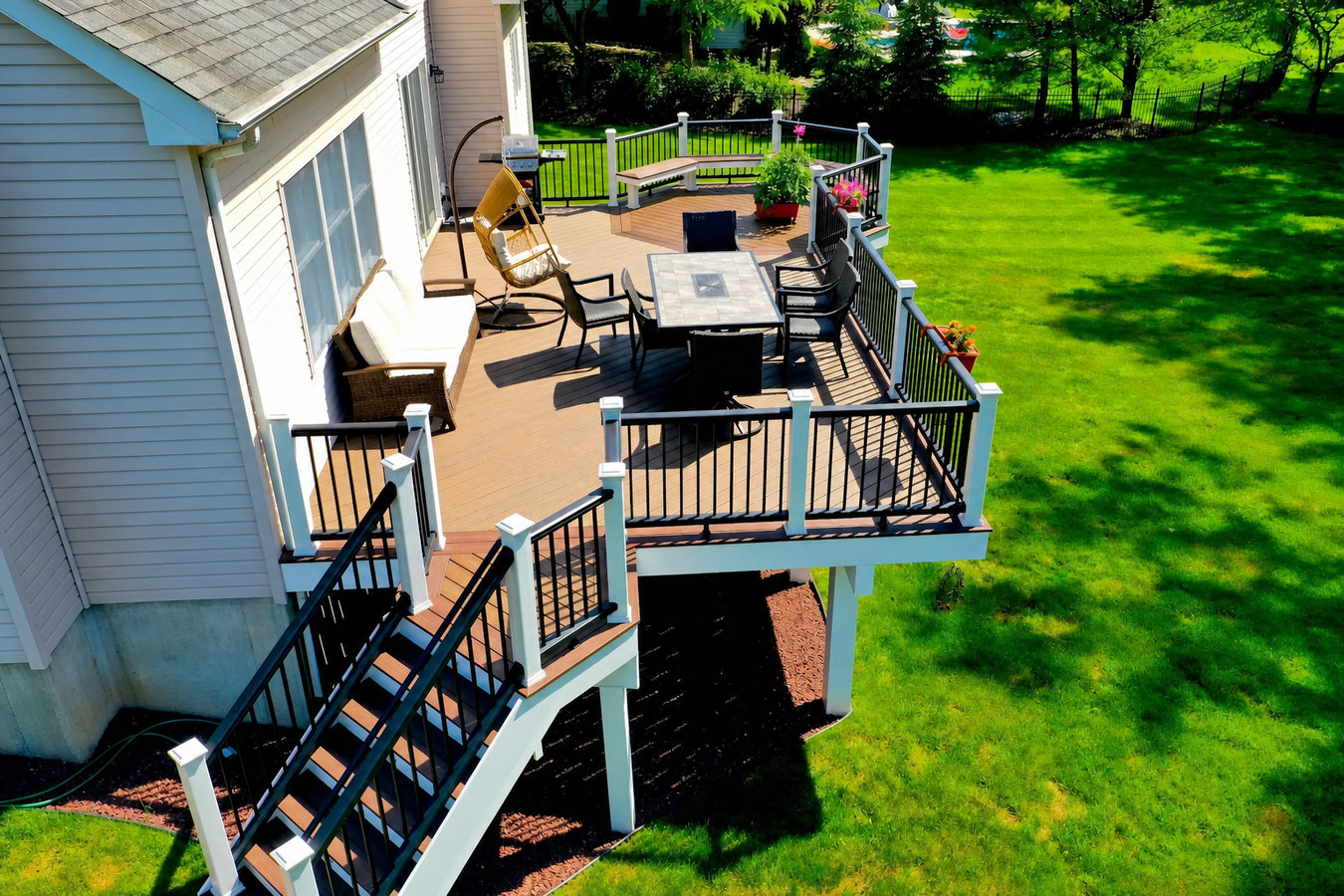
A sloped backyard does not have to be dead space. A multi-level deck steps down with your land and gives you real outdoor living on every level.
Multi-level decks in National City are outdoor structures built at two or more connected heights, designed to follow sloped or uneven terrain - most projects take four to eight weeks from permit approval to finished walkthrough, depending on size and materials.
A significant portion of National City sits on rolling terrain, particularly in the hillside neighborhoods above the bay. That slope is the reason so many backyards go unused - a flat concrete pad does not work well when the ground drops off, and grading an entire hillside is expensive. A multi-level deck solves the problem differently: each level follows the natural grade, creating separate outdoor zones for dining, lounging, or gardening without moving a yard of dirt. If you want a kitchen or bar area incorporated into the build, combining a multi-level frame with an outdoor kitchen deck scopes both as one permitted project from the start.
The parts of the structure you cannot see matter most - how deep the post footings are set, how the ledger attaches to your home, and whether the framing is correctly sized for the load. These are the details that separate a safe deck from a problem deck, and they are exactly what a city inspector checks before the decking boards go down.
If your yard drops away from the back door and you have never figured out what to do with it, that is the clearest sign a multi-level deck could transform your space. Sloped lots in National City's hillside neighborhoods are common, and a flat slab is often the wrong answer. A deck that steps down with the slope turns that unused ground into something you will actually spend time on.
Some National City homes on hillside lots have a back door that opens to a short drop or a narrow concrete step with no real outdoor space. That is both a safety issue and a missed opportunity. A multi-level deck can create a proper landing at door height and then step down to a larger entertaining area, making the transition from inside to outside feel natural.
If your current deck only serves one purpose - a grill and two chairs - and you wish you had more room, adding a lower level is often more practical than tearing out and starting over. A second level can become a dining area, a lounge space, or a container garden zone. Many National City homeowners find a second level also improves their view toward the bay on clear days.
Soft spots underfoot, boards that flex more than they used to, or visible gaps between decking and the frame are signs the structure has aged past simple repairs. National City's salt air and UV exposure accelerate wood decay, especially on decks that were not regularly sealed. If the damage is widespread, a full replacement with a multi-level upgrade often makes more financial sense than patching.
Every multi-level deck project starts with an on-site assessment of your slope, your home's back-wall framing, and your lot's setback requirements. We design the level layout around your terrain rather than forcing a standard plan onto your property. Once the design is finalized, we handle the permit application with National City's Development Services Department - your contractor submits the plans and coordinates the framing inspection before any boards go down. Post footings are set into concrete to the depth the load requires, the ledger is attached to your home's framing, and the beam-and-joist skeleton goes up for both levels. After the city's framing inspection, the deck boards are installed, stairs are framed between levels, and railings are installed to current California height and spacing requirements. Any homeowner who wants the full picture of what goes into a deck from the ground up can explore our custom deck design and build page for a detailed look at how each phase fits together.
For the finished surface and hardware, material selection matters more in a coastal location. Composite decking holds its color and resists moisture better than pressure-treated wood in National City's salt-air environment, though wood options are available for homeowners with a tighter budget. Stainless steel fasteners are standard on all coastal projects. After the deck is complete, we also offer deck railing installation as a standalone service for existing decks that need updated railings to meet current safety requirements.
The most common configuration for National City's sloped lots - one level at back-door height, a second stepped down to yard grade, connected by a staircase. Suits most residential backyards.
For steeper slopes or larger properties that call for multiple distinct outdoor zones. Each level serves a different function - entrance, dining, lounge - creating a full outdoor living sequence.
Multi-level framing with composite decking on all surfaces. The right choice for homeowners who want near-zero maintenance over the long term in National City's coastal environment.
A budget-conscious option that holds up well when sealed regularly. Best suited to homeowners comfortable with annual or biannual maintenance to protect against coastal moisture and UV.
National City's terrain is one of the primary reasons multi-level decks are so practical here. The city's hillside neighborhoods, particularly in the western and central residential areas above the bay, sit on rolling ground that flat-lot construction does not handle well. Rather than expensive grading or an awkward raised slab, a deck that follows the natural slope turns the grade into an asset - giving you separate outdoor levels for different activities. The proximity to San Diego Bay also means salt air, morning marine layer, and strong UV exposure are real factors in material selection. Homeowners in coastal-adjacent neighborhoods like those near Chula Vista face the same coastal exposure, and the same material priorities apply.
National City's housing stock also shapes how multi-level deck projects are planned. Most single-family homes in the city were built between the 1940s and 1970s, which means the ledger attachment point - where the deck connects to your home - often involves older framing that needs to be assessed before the design is finalized. HOA approval requirements apply in some newer planned communities. Permit review goes through National City's Development Services Department and adds one to three weeks to the timeline before any framing begins. Homeowners in nearby Spring Valley face similar permit timelines through San Diego County, so scheduling early makes a real difference in how quickly you can break ground.
We visit your property to assess your slope, inspect the back-wall framing, and talk through design options. You receive a written estimate that itemizes materials and labor - no vague allowances. We reply within one business day of your first contact.
Once you approve the design and sign a contract, we submit permit plans to National City's Development Services Department. Permit review typically takes one to three weeks. You do not need to do anything during this time - we handle the paperwork.
Post footings are dug and filled with concrete at the depth the structure requires. After the footings cure, beams, joists, and the ledger connection to your house are framed for both levels. A city inspector reviews the framing before any decking goes down.
With framing approved, deck boards are installed, stairs are built between levels, and railings go up to current California height and spacing requirements. The city inspector returns for a final check, and we walk you through the finished deck with care instructions and permit records in hand.
We handle permits, inspections, and material selection - you just show us the yard.
(858) 599-0508Most of our multi-level deck projects in National City are on sloped properties. We set post footings to the depth the elevation difference requires, and we assess the home's ledger attachment point before the design is finalized - not after the crew shows up. That upfront review means no mid-project surprises on older homes.
We apply for every permit your project requires through National City's Development Services Department and schedule the required framing and final inspections. A city inspector verifies the structural work before it is covered. That documented record protects your investment and travels with the home when you sell.
National City's proximity to San Diego Bay means salt air is a real factor. We specify stainless steel fasteners and marine-grade hardware on every coastal project - not as an upsell, but as the standard. The{' '}North American Deck and Railing Association sets guidance on coastal construction practices that we follow. See NADRA's resources at{' '}nadra.org.
Much of National City's housing was built in the mid-20th century. We check the rim joist and back-wall framing condition during the estimate visit. If reinforcement is needed, we tell you upfront and include it in the quote - so the price you agree to reflects the actual scope, not a number that grows once we start.
These are not talking points - they are the specific steps that keep multi-level deck projects on schedule and free of the structural problems that show up years later. When the work is permitted, the materials are right for the coast, and the framing is assessed before a contract is signed, the deck you get is one you can rely on.
Add or replace railings on your multi-level deck to meet current California height and baluster-spacing requirements.
Learn MoreStart from scratch with a fully custom design that incorporates multi-level framing, material choices, and your lot's specific dimensions.
Learn MorePermit timelines in National City mean the sooner you reach out, the sooner you are outside enjoying it - contact us today to lock in your project date.